Psychological Safety in Meetings: What Gets in the Way
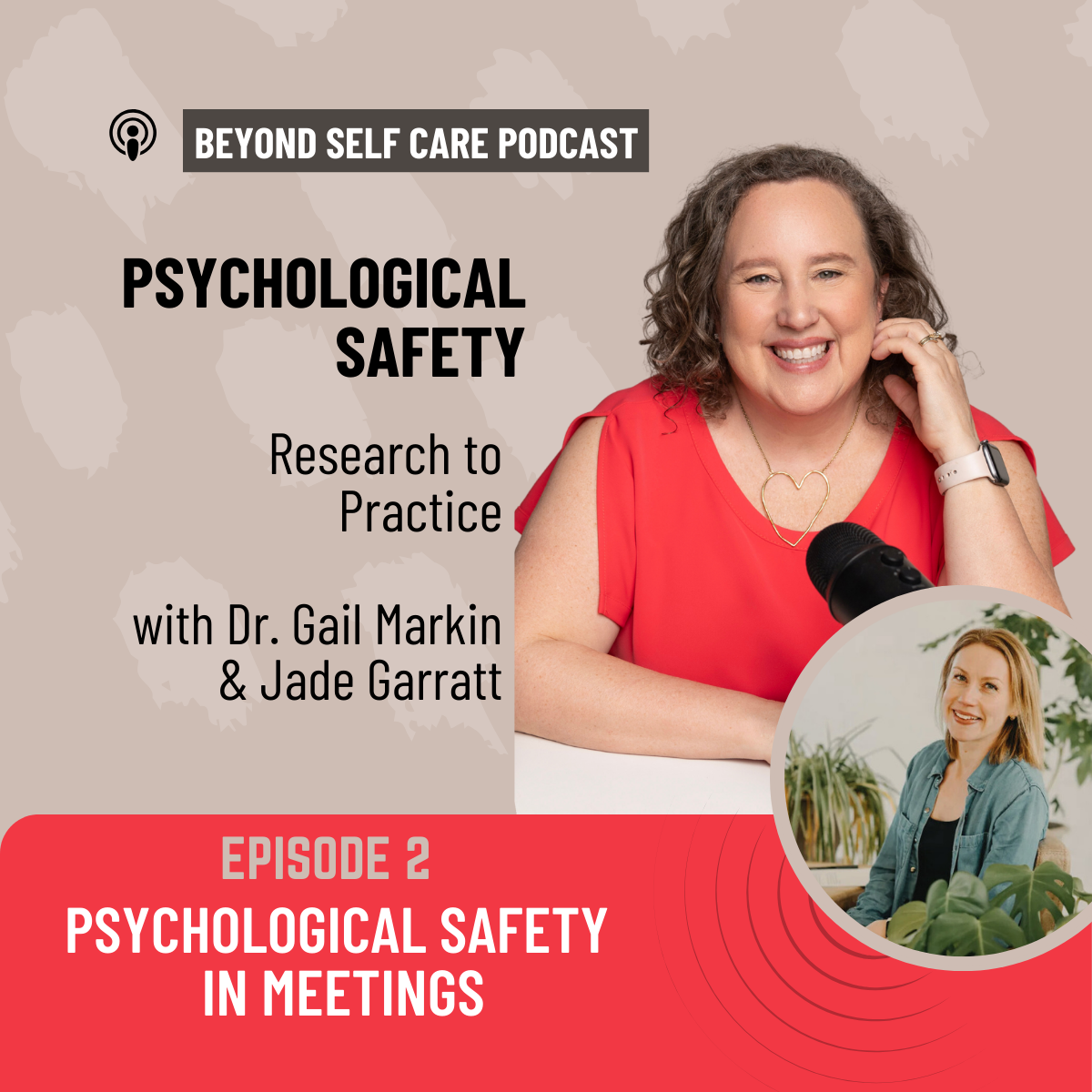
Psychological Safety: Research to Practice
Listen here
Subscribe on Apple Podcasts, Amazon Music & Audible or Spotify!
Or subscribe here for an email with each episode!
When Good Intentions Aren’t Enough
Many organizations believe they value openness, trust, and collaboration. Yet even in environments with strong intentions, people still hesitate to speak up, question decisions, or admit uncertainty in meetings. In Episode 2, Gail Markin and Jade Garratt continue the conversation on psychological safety by exploring a more uncomfortable question:
If we know this matters, why is it still so hard to create?
With special guest Tamara Zaple Rolfs, this episode moves past definitions and into the real-world barriers that quietly undermine psychological safety, even in teams that genuinely care about getting it right, exploring how to run psychologically safe meetings.
Guest Spotlight: Tamara Zaple Rolfs
Tamara brings a practitioner’s perspective to the conversation, drawing on her experience working in schools and alongside educators. She speaks candidly about what psychological safety looks like from the inside of school systems, where expectations are high, and vulnerability can feel risky. Tamara works with school and Trust leaders to help build the skills to navigate the tough stuff with clarity and confidence.
Key Ideas
Psychological Safety Is Built in Moments
A central idea in this episode is that psychological safety is not a static achievement, but rather something that is created and recreated over time. It can be disrupted easily, but it is also built the same way: through everyday interactions. Small moments matter. A dismissive response, an unacknowledged contribution, or a pattern of who gets heard can quietly erode trust. Likewise, consistent care in those moments can reinforce it. Psychological safety is often shaped not by dramatic events, but by accumulation.
Fear, Silence, and Learned Behaviour
Silence is often misread as agreement or disengagement. This episode challenges that assumption.
Gail, Jade, and Tamara discuss how people learn, over time, what is safe to say and what is better left unsaid. Past experiences, organizational culture, and power dynamics all shape these decisions. What looks like apathy is often self-protection.
Systems Matter as Much as Individuals
While individual behaviour and relationships are important, psychological safety is also shaped by systems. Performance metrics, time pressure, hierarchy, and incentives all send signals about what is truly valued. This episode pushes back against the idea that psychological safety is solely about being a “better communicator.” Instead, it asks leaders and organizations to examine the structures that reward certainty over curiosity or speed over reflection.
Repair Is Part of the Work
This episode highlights the importance of repair: acknowledging harm, inviting conversation, and taking responsibility. Repair builds credibility and trust, while avoidance often deepens fear. Psychological safety does not require perfection. What matters most is what happens after something goes wrong.
“How leaders respond in [the] moment makes all the difference.”
Key Takeaways
Psychological safety is fragile and dynamic, not a one-time achievement.
Silence often signals risk awareness, not disengagement.
Organizational systems can quietly undermine safety, even with good intentions.
Repair and accountability are essential to sustaining trust.
What You Can Do
Design meetings to include collaboration and reflection.
Co-create group norms or a team charter.
Embed the expectation of and opportunities for feedback.
Normalize and plan for mistakes and conflict.
🎧 Listen to the full episode to explore the barriers that quietly shape psychological safety in meetings and everyday practice.
“Those moments in meetings send really strong signals to people about whether it’s safe to speak.”